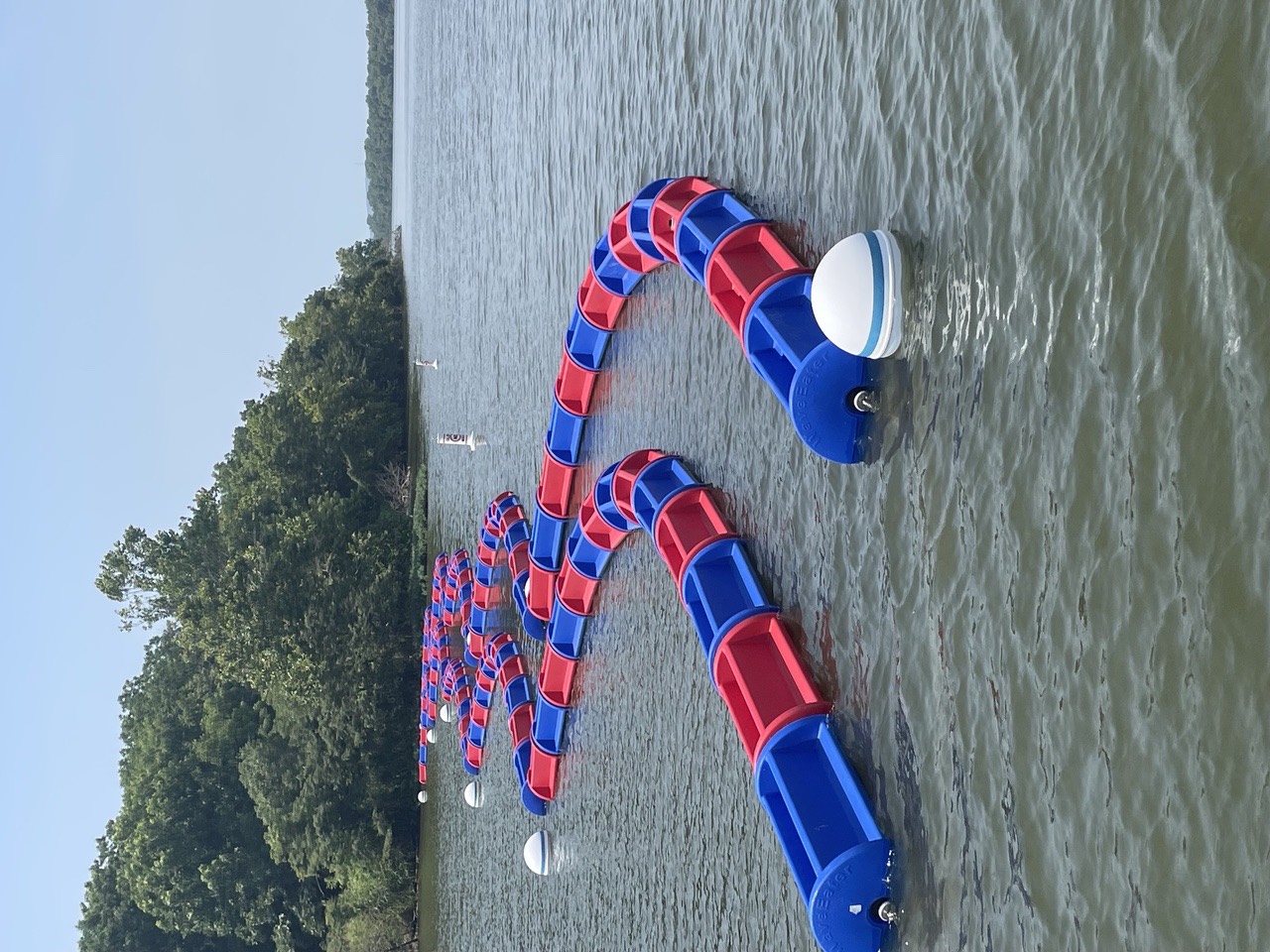
Model 4870
Introduced in 2022. The patented waffle reduces wave energy below the surface while still allowing water to circulate, which reduces algae and sediment buildup.
Molded polyethylene units, filled with water on site. No piles to drive, no concrete to pour.
See the layout and estimate for your site.
Get an EstimateIntroduced in 2022. The patented waffle reduces wave energy below the surface while still allowing water to circulate, which reduces algae and sediment buildup.
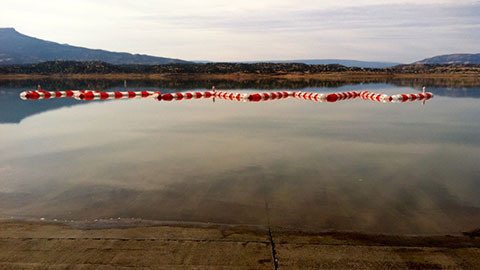
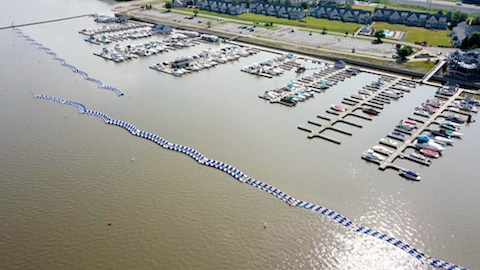
In use for over thirty years. Wave attenuation, dam protection, shore erosion control and debris booms, in the US and other parts of the world.
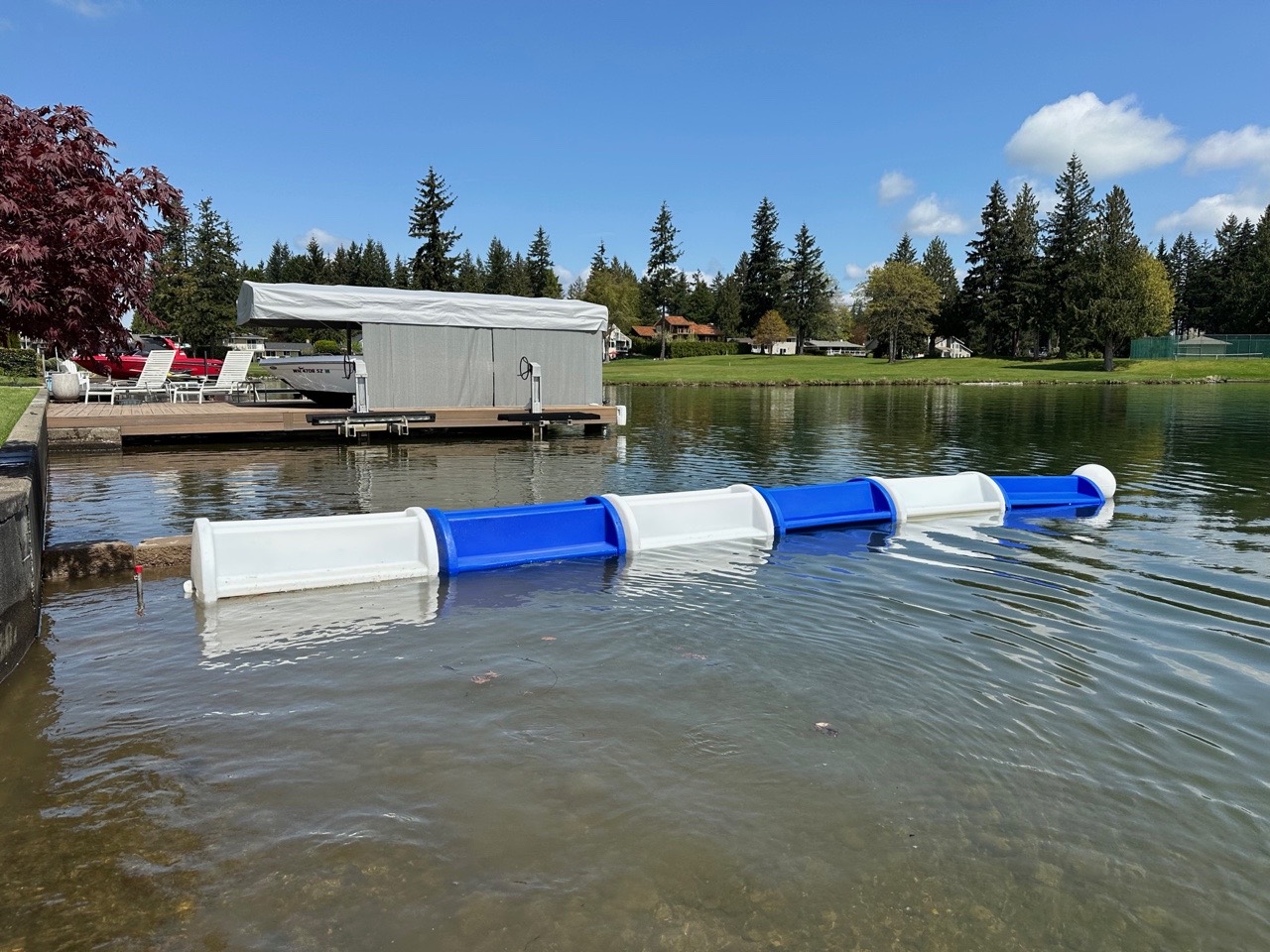
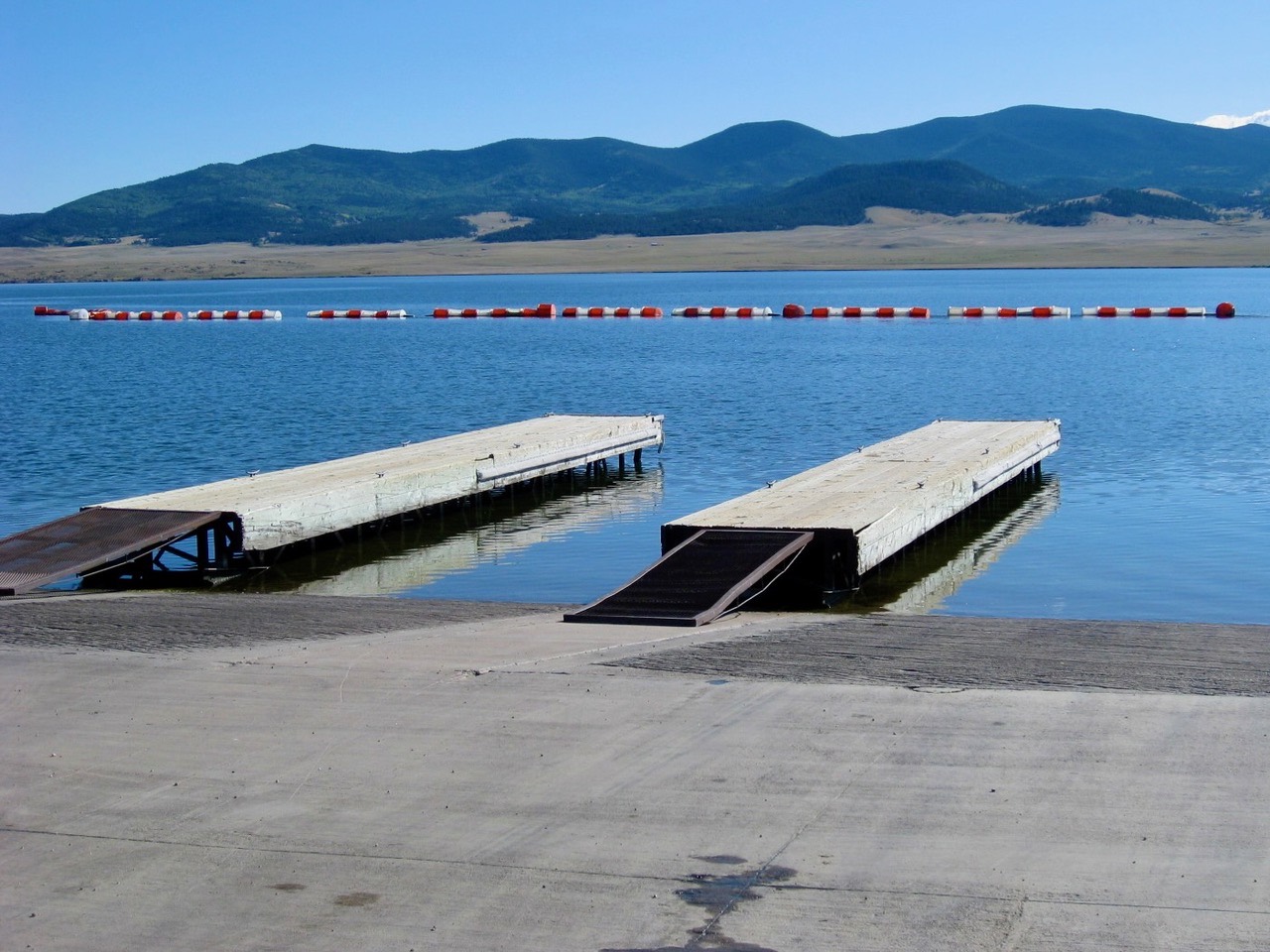
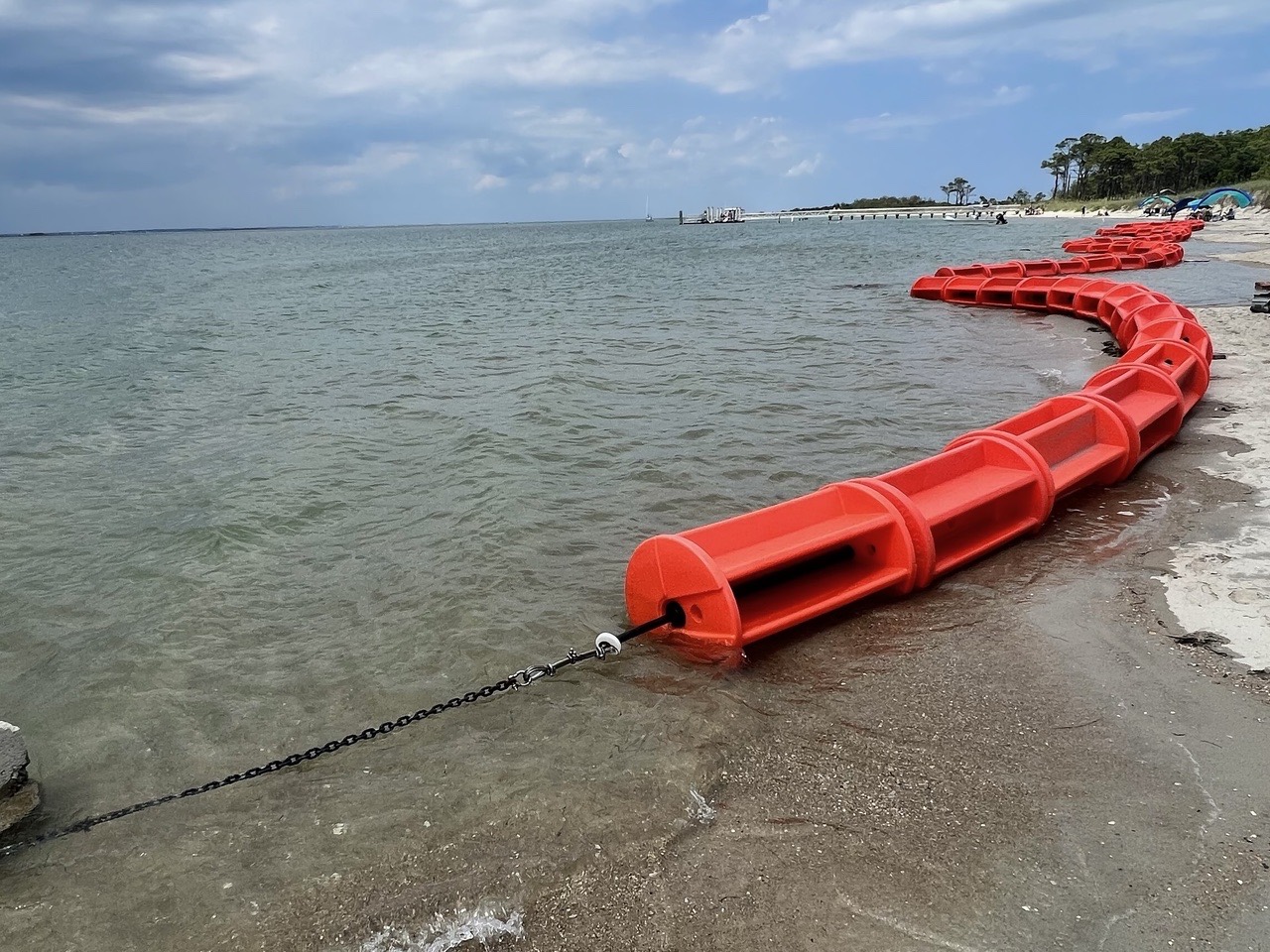
WaveEater unit Model 2648 measures 26” diameter x 48” long and is designed for areas that require a high visibility barrier with some attenuation. The Model 2648 is an excellent choice as a deterrent to boats and jet skis entering a swim or recreational areas where safety is a concern. Its price point also makes it economical for use in dam demarcation, shoreline erosion control, natural beach nourishment, large chemical pond effluent containment and liner protection.
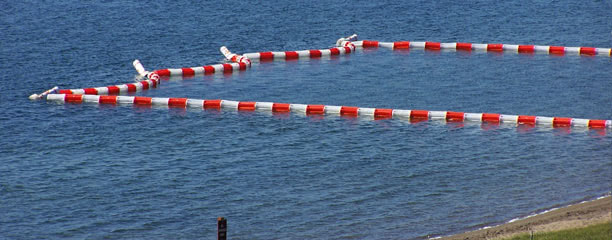
WaveEater unit Model 1224 measures 12” diameter x 24” long. Ideal for swim area markers, aeration floats and small effluent ponds.
See every photo in the gallery
Tell us what you are protecting.
Get an EstimatePlus 14 more agencies and 33 private marinas and yacht clubs. Every installation. Buying for a public agency? Government sales.
WaveEater is an innovative, convenient, floating breakwater system designed for various waterfront applications that is both easy to install and environmentally safe.
Our breakwater devices are constructed of linear low density molded polyethylene with a high density polyethylene tubular core. The interior is hollow which is filled with water at installation until the units are two-thirds submerged. The exterior has a series of baffles that agitate back and forth as the waves strike the system.
WaveEater's innovative design allows for a number of different configurations based on the amount of wave dissipation (the removal of wave height and energy) required, as it passes through the attenuator.
When engineering a wave attenuation system we take into account the wave length (distance crest to crest), wave height, water depth and fetch distance. Based on those aquatic specifications, we can design a breakwater system encompassing your specific needs.
Our product provides a means of protection that is both economical and functional. Installations in the US and various other countries have been designed for protecting marinas, boat launch facilities, utility spillways, shore erosion prevention and even floating breakwater for fish farms.
Since WaveEater is comprised of plastic and filled with water its footprint on the environment is minimal, thereby allowing for an expedited processing when design and installation permits are required.
A recommended layout, the quantities and an estimate, right away. No long form.